

The Plunge Alternative for Athletes: Top Cold Plunge Picks
Table of Contents
- Quick Comparison: Top Plunge Alternatives for Athletes
- Why Athletes Choose a Plunge Alternative
- Key Features to Look for in a Cold Plunge Tub
- The Benefits of Daily Cold Plunge for Athletic Recovery
- How Long to Cold Plunge for Inflammation: Timing Guidelines
- Top Plunge Alternatives for Athletes: Reviews and Pricing
- Common Mistakes and Safety Precautions for Cold Plunge
- Conclusion: Which Plunge Alternative Fits Your Recovery Routine?
- Frequently Asked Questions
Last Updated: October 2, 2026
Quick Comparison: Top Plunge Alternatives for Athletes
The best Plunge alternative for athletes is a deep acrylic tub with a high-horsepower chiller, not a rebranded chest freezer. Heaven 417 carries several options; the table below compares depth, temperature range, and water volume.
| Cold Plunge System | Price | Temperature Range | Best For |
|---|---|---|---|
| RevX Acrylic X Tub + LUX Chiller | $7,500 | 34°F to 104°F | Full shoulder submersion |
| Kooru Cold Plunge Tub | $7,999 | Chiller-controlled, 110V | Handcrafted redwood look |
| Frost Cold Plunge Tub | $7,999 | 37°F to 108°F | Indoor and outdoor use |
| Aurland Cedar Ice Bath (with chiller) | $6,999 | 1HP chiller | Contrast therapy setups |
| Aurland Cedar Ice Bath (no chiller) | $6,299 | Manual ice only | Budget-conscious buyers |
Why Athletes Choose a Plunge Alternative
Athletes switch away from brand-name plunges for three reasons: better depth, stronger chillers, and lower long-term cost per session. A waist-deep tub limits the circulatory response; a shoulder-deep tub delivers it.

Cleveland Clinic overview of cold water immersion therapy
Key Features to Look for in a Cold Plunge Tub
Depth and chiller horsepower decide everything. A tub under 30 inches tall forces a seated slump with shoulders exposed, so look for at least 33 inches of interior height.
- Depth: 33+ inches for shoulder-level immersion
- Chiller power: 1HP or higher for consistent cold in warm climates
- Insulation: foam-insulated walls hold temperature and cut run time
- Filtration: ozone or cartridge filtration keeps water clear between changes
- Drainage: a center or side drain saves you from bailing buckets
- Electrical: most 1HP units run on 110V; confirm before you buy
The Benefits of Daily Cold Plunge for Athletic Recovery
Most articles on cold plunge benefits stop at "it reduces soreness." The benefits that move performance fall into three buckets: physical recovery, nervous system regulation, and psychological resilience.

Physical recovery: what the evidence supports
Delayed onset muscle soreness, or DOMS, peaks roughly 24 to 72 hours after hard training. Cold exposure narrows blood vessels and may blunt some of the inflammatory signaling that drives that soreness. You feel better sooner, which matters when you train on back-to-back days.
Nervous system regulation: the underrated mechanism
Cold water immersion is a controlled stressor, and the adaptation it produces is largely autonomic. Heart rate and respiration spike during exposure, then parasympathetic tone increases during recovery. Many regular plungers report higher heart rate variability and better sleep, though research is still catching up.
Psychological performance: the benefit nobody measures
The mental side gets undersold, and it's arguably the most durable benefit for competitive athletes. Cold immersion is a stressor you choose. Finishing it, staying in when every instinct says get out, is a repeated, low-stakes rehearsal of voluntary discomfort.
What daily actually means
"Daily" is aspirational for most athletes. Three to five sessions per week captures the autonomic and psychological benefits and is more sustainable during heavy training blocks. More isn't better, adaptation comes from the recovery between exposures, not the exposure itself.
Cleveland Clinic overview of cold water immersion therapy
How Long to Cold Plunge for Inflammation: Timing Guidelines
The practical answer for how long to cold plunge for inflammation is 10 to 15 minutes at 50°F to 59°F, or 2 to 5 minutes at 45°F and below. Colder water needs less time, but timing is where most athletes get it wrong.

What's actually happening during cold exposure
When you enter cold water, peripheral blood vessels constrict sharply. Blood flow to skin and muscle drops, reducing delivery of inflammatory mediators, prostaglandins, cytokines, and neutrophils, to damaged tissue. When you step out, vessels dilate and circulation rebounds, flushing metabolic waste. That constrict-then-rebound cycle, not the cold itself, reduces perceived soreness.
Timing by training goal
The right window depends entirely on what you're trying to adapt to:
- After endurance work (runs, rides, rows): plunge within 30 to 60 minutes. The goal is managing swelling and restoring range of motion before your next session, and the adaptation you're chasing is cardiovascular, not muscular.
- After strength or hypertrophy work: wait at least 4 to 6 hours, or skip it entirely on heavy training days. A common pattern among strength coaches is to move cold exposure to rest days or to the evening after a morning lift, preserving the early inflammatory window that drives muscle protein synthesis.
- On rest days: a morning plunge supports alertness and parasympathetic tone. This is the lowest-risk window for anyone worried about hypertrophy interference.
- Before competition: 1 to 3 minutes at a moderate temperature can sharpen focus through a controlled catecholamine spike. Test it in training first, a novel stressor on game day is a gamble.
- Between same-day sessions (two-a-days): a short plunge between sessions can restore performance for the second bout, which is one of the few scenarios where immediate post-exercise cold has a clear performance rationale.
The hypertrophy trade-off, stated plainly
Cold water immersion after resistance training can dampen the inflammatory signaling that initiates muscle protein synthesis and satellite cell activation. For athletes chasing size or strength, that's a real cost. For athletes chasing endurance, skill, or same-day repeat performance, it's often a worthwhile trade.
Duration by water temperature
- 45°F and below: 2 to 5 minutes. This is cold enough that duration is limited by safety, not by benefit.
- 46°F to 50°F: 5 to 8 minutes. A common working range for experienced plungers.
- 50°F to 59°F: 10 to 15 minutes. The sweet spot for beginners and for athletes who want a longer, more tolerable session.
- 60°F and above: 15 to 20 minutes. Useful for cooldown and circulation, but the cold-shock response is muted.
National Institutes of Health research on cold water immersion and recovery
Top Plunge Alternatives for Athletes: Reviews and Pricing
Every system below is a genuine Plunge alternative for athletes, and each solves a different problem: the RevX leads on depth, the Kooru on craftsmanship, and the Aurland line on contrast therapy.
RevX Acrylic X Tub Cold Plunge + LUX →
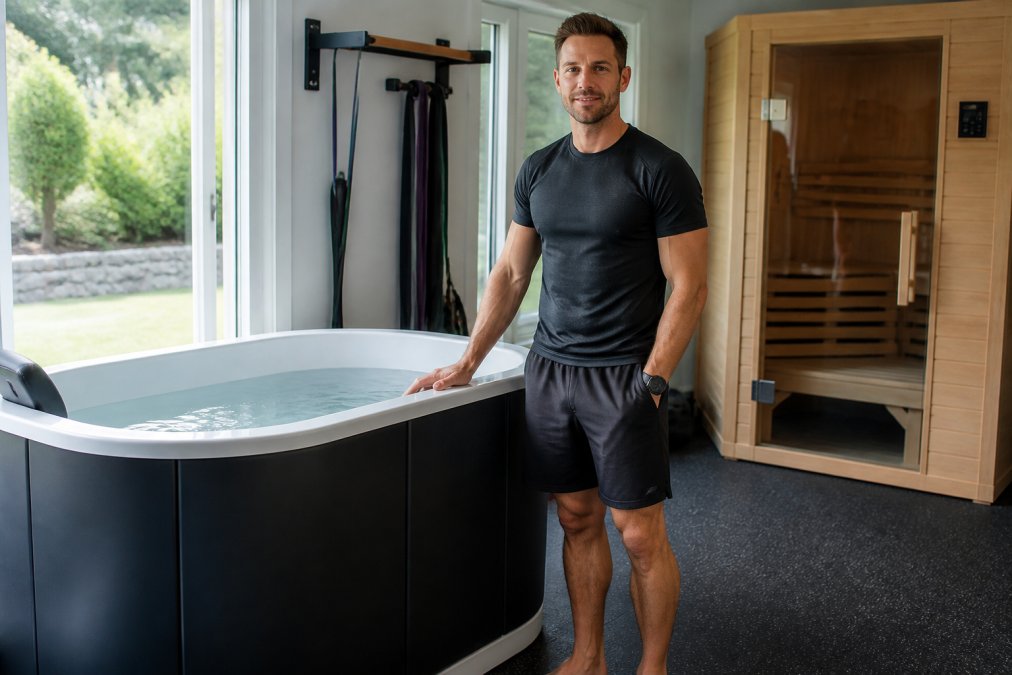
RevX Acrylic X Tub + LUX Chiller and Filtration System
The RevX is the deepest acrylic tub here at over 34 inches tall, giving full above-the-shoulder submersion while you stay upright. Three-inch foam-insulated walls keep the water cold.
Kooru Cold Plunge Tub
The Kooru is handcrafted redwood, finished with the Japanese Shou Sugi Ban charring technique that protects against moisture and pests. It holds roughly 60 gallons and runs on a standard 110V outlet.
Frost Cold Plunge Tub
The Frost pairs a 1HP integrated chiller with a glossy acrylic shell and holds 37°F to 108°F. At 77 inches long it's the roomiest single-person tub here, and the freestanding design works indoors or out.
Best for: athletes who want set-and-forget temperature control.
Aurland Cedar Ice Bath (With 1HP Chiller)
The Aurland combines Canadian Red Cedar outside with a 304 stainless steel liner inside, solving the maintenance problem wood tubs usually have. The oval profile fits one to two people, and the 1HP chiller handles contrast therapy with a sauna.
Aurland Cedar Ice Bath (No Chiller)
Same tub, no chiller, $6,299. You add ice manually and drain after sessions, you save money and skip electrical work, but commit to buying and hauling ice.
The drawback: manual ice gets old fast in summer.
Common Mistakes and Safety Precautions for Cold Plunge
The most common mistake is going too cold too fast. Cold shock hits in the first 30 seconds, and pushing past what your breathing can handle is how people get hurt.
Other mistakes worth avoiding:
- Plunging immediately after heavy lifting if muscle growth is your goal
- Skipping filtration maintenance, which turns clear water cloudy within weeks
- Placing a chiller on an ungrounded outlet, which most manufacturers warn against
- Ignoring contraindications like heart conditions or Raynaud's syndrome
Conclusion: Which Plunge Alternative Fits Your Recovery Routine?
Choosing a Plunge alternative for athletes comes down to one question: what's limiting your recovery right now? If it's depth, the RevX solves it. If it's aesthetics, the Kooru or Aurland fits your space. If it's budget, the Aurland without a chiller costs less.
Frequently Asked Questions
Are cold plunges actually effective for athlete recovery?
Yes, cold water immersion is widely used by athletes to reduce muscle soreness and speed recovery. Research shows it can lower inflammation and perceived fatigue after intense training. Many professional and college sports teams incorporate cold plunges into their recovery protocols. For best results, combine cold plunge sessions with proper nutrition, sleep, and active recovery. Individual responses vary, so start with shorter durations and adjust based on how your body feels.
What is the best ice bath tub for athletes?
The best ice bath tub for athletes depends on your space, budget, and recovery goals. Look for a tub with a powerful chiller that maintains temperatures between 34°F and 45°F, durable insulation, and easy drainage. For a premium option, the RevX Acrylic X Tub Cold Plunge at $7,500 offers a 1.5 HP chiller and deep submersion. The Frost Cold Plunge Tub at $7,999 includes a 1 HP chiller and fits one person comfortably. Consider your daily routine and installation requirements before choosing.
How long should athletes cold plunge for inflammation?
For inflammation reduction, most athletes cold plunge for 10 to 15 minutes at temperatures between 45°F and 55°F. Beginners should start with 2 to 3 minutes and gradually increase. The optimal duration depends on water temperature: colder water requires shorter sessions. Aim for 10 to 15 minutes total, three to five times per week. Always exit if you experience numbness or shivering. Consistent sessions yield better results than occasional long plunges.
What are the key features to look for in a cold plunge tub?
Prioritize a reliable chiller with enough horsepower to maintain your target temperature, typically 1 HP or higher. Look for insulation to keep energy costs down, a filtration system for water cleanliness, and durable materials like acrylic or cedar. Ease of installation matters: some tubs require 110V outlets, while others need 240V. Also check warranty coverage and drainage design. A tub that fits your space and routine will get used more often.
Is a professional-grade cold plunge worth the investment for athletes?
A professional-grade cold plunge can be worth it if you train regularly and want consistent, convenient recovery. Unlike DIY ice baths, a chiller-equipped tub maintains precise temperatures and requires less daily effort. Prices range from $6,299 to $7,999 for high-quality models. Over several years, the cost per session drops significantly compared to cryotherapy clinics or spa visits. If you have the space and budget, a home unit offers long-term value.
Cold plunging only pays off if the tub is easy enough to use that you actually get in it. Heaven 417 helps you build that habit with premium cedar saunas and cold plunge systems designed for contrast therapy and long-term recovery, backed by guidance from selection through installation. Get started with Heaven 417 and turn your backyard into a recovery sanctuary.