

Cold Plunge Water Temperature Maintenance Tips
Table of Contents
- What Is the Ideal Cold Plunge Temperature?
- How to Keep Cold Plunge Water Cold: Equipment and Methods
- Cold Plunge Chiller Settings: How to Dial In Your System
- Why Cold Plunge Temperature Fluctuations Happen and How to Fix Them
- Temperature Monitoring Schedule: What to Check and When
- Seasonal Cold Plunge Maintenance: Summer Heat and Winter Freezing
- Water Quality and Sanitation: Keeping Temperature and Cleanliness in Check
- Frequently Asked Questions
Last Updated: October 7, 2026
What Is the Ideal Cold Plunge Temperature?
The ideal cold plunge water temperature is 45°F to 55°F (7°C to 13°C) for most people. Beginners do best near 55°F; seasoned users settle between 45°F and 50°F.

Cold plunge water temperature maintenance tips start with one rule: pick a target, then hold it. Water that swings 10 degrees between sessions feels unpredictable and makes it harder to track how your body responds.
Temperature Ranges by Experience Level
Bodies adapt at different speeds. Use this as a starting map:
| Experience Level | Target Range | Typical Session |
|---|---|---|
| First month | 55°F to 59°F | 1 to 3 minutes |
| Comfortable | 50°F to 55°F | 3 to 6 minutes |
| Experienced | 45°F to 50°F | 5 to 10 minutes |
| Advanced | 41°F to 45°F | 2 to 5 minutes |
A common mistake is chasing the coldest number in week one. Cold exposure is a skill built through gradual acclimation, not shock.
How to Keep Cold Plunge Water Cold: Equipment and Methods
Keeping cold plunge water cold comes down to ice, a chiller, or a mix of both.
Here is how the main methods compare:
| Method | Upfront Cost | Effort | Best For |
|---|---|---|---|
| Bagged ice | Low per use | High, daily | Occasional plunges |
| Block ice | Low per use | Medium | Small tubs, short sessions |
| Chiller | Higher | Low | Daily use, set temps |
| Chiller + cover | Higher | Lowest | Year-round outdoor setups |
Water volume matters more than most people expect. A larger tank takes more ice to cool but holds its temperature longer; smaller tubs chill fast and warm fast.
Insulation is the other half of the equation. The U.S. Department of Energy guidance on insulation and heat loss explains how covers and insulation slow heat transfer in any water system.
Ice vs. Chiller: Which Works Better for Your Setup
Ice wins for casual users who plunge a few times a week and do not mind hauling bags. A chiller wins for daily users who want a fixed temperature with no guesswork.
For anyone plunging most days, a chiller pays back in time saved. The Frostgard Pro Ice Bath Chiller uses a 1 HP compressor to hold water between 3°C and 42°C, so you can switch from cold immersion to a warm session without draining the tub.

Cold Plunge Chiller Settings: How to Dial In Your System
Set your chiller to your target temperature, then leave it. Most units cool best set 2 to 3 degrees below your goal, since water warms slightly each time you get in.
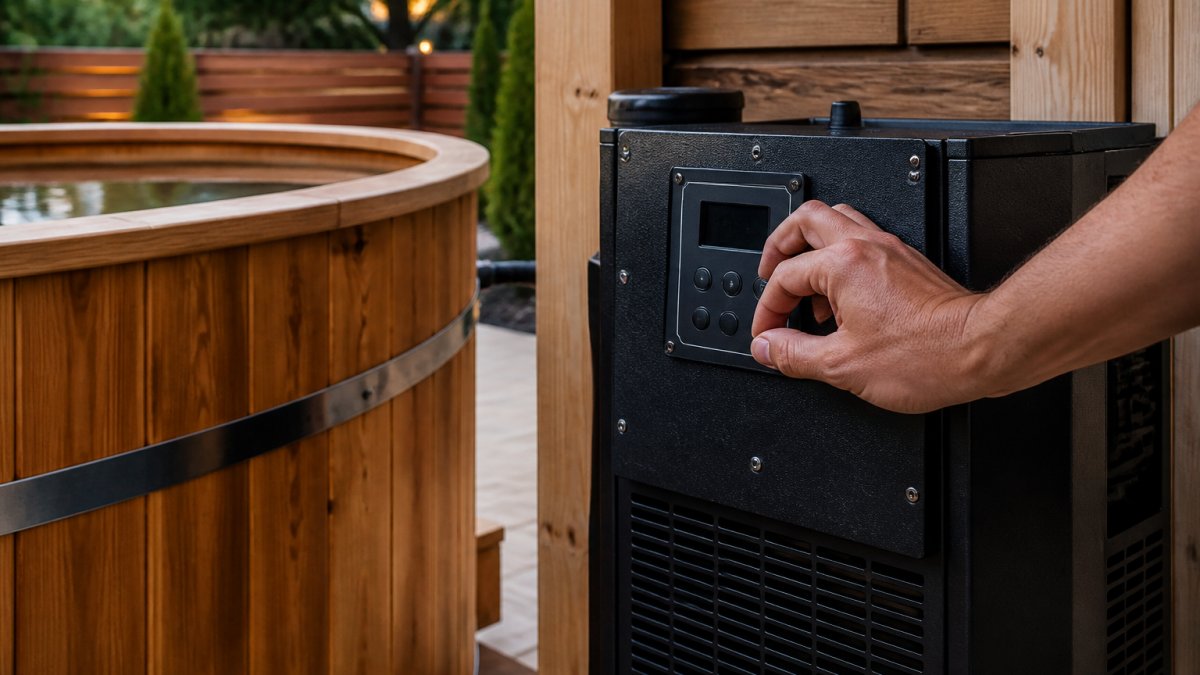
A few settings matter more than the rest:
- Target temp: Your goal number, minus 2 to 3 degrees
- Circulation: Keep the pump running so cold water mixes evenly
- Filtration: Run it on a schedule so debris does not clog flow
The RevX Acrylic X Tub pairs a 1.5 HP chiller that cools to 34°F or heats to 104°F. Its 3-inch foam-insulated walls help hold that temperature between sessions.
Why Cold Plunge Temperature Fluctuations Happen and How to Fix Them
Temperature drift almost always traces back to four causes: heat gain from the environment, restricted water flow, a chiller that cannot keep up with the load, or a measurement error. The guide below matches symptom to cause so you fix the right thing the first time.
Troubleshooting Temperature Drift by Symptom
Symptom: Water is warming faster than usual.
- Check the cover, a tub left open in direct sun gains heat quickly, and a loose or warped lid lets warm air in.
- Check sun exposure, move the tub to shade or add a reflective cover during peak hours.
- Check the set point, a chiller set at or above your target has no margin to recover after a session.
- Check the load, more bathers, longer sessions, and warmer ambient air all add heat.
Symptom: The chiller runs constantly but never reaches its set point.
- Check the filter and strainer, a clogged filter slows flow, the most common cause of weak cooling.
- Check the vents, blocked or dusty condenser vents trap heat and cut capacity.
- Check the size, an undersized chiller runs nonstop and still falls short. Match capacity to gallons, not footprint.
- Check the ambient temperature, a chiller rated for a mild climate loses capacity in extreme heat.
Symptom: The display shows a temperature that does not match the water.
- Cross-check with a handheld thermometer at mid-depth, away from the return.
- Check sensor placement, a probe in the chiller return stream reads colder than the bulk water.
- Check for sensor drift, built-in sensors lose accuracy over time and may need recalibration or replacement.
- Check the wiring, a loose connection can produce erratic or frozen readings.
Symptom: Water is freezing when you did not intend it to.
- Check the set point, a chiller near its lowest limit can drive water below freezing in a small, well-insulated tub.
- Check for a stalled pump, if circulation stops, still water near the chiller can freeze even when bulk temperature is above freezing.
- Check exposed lines and fittings, water in an uninsulated line freezes before the tub does.
- Check the thermostat, a faulty thermostat can let the chiller run past its target.
The Order to Check Things In
Work from the cheapest and most likely cause to the least likely:
- Cover and shade, free to check, common cause.
- Flow, filter, strainer, and pump. Restricted flow explains most drift complaints.
- Vents and airflow, a five-minute cleaning often restores full cooling capacity.
- Set point and sizing, confirm the chiller is rated for your gallons and climate.
- Sensor and thermostat, verify readings before assuming the chiller is failing.
- Seals and insulation, worn lids, cracked fittings, and thin walls let heat in steadily.
Most drift complaints trace back to flow, not the chiller. Clean water moves heat out of the tub far better than dirty water, and a chiller that cannot circulate cannot cool.
Aurland Cedar Ice Bath - With 1HP Chiller →
Temperature Monitoring Schedule: What to Check and When
A target temperature only holds if you know what the water is doing. The routine below turns temperature maintenance into a repeatable habit and fixes the most common measurement error: trusting a sensor that has quietly drifted.
A Repeatable Monitoring and Adjustment Routine
| Frequency | Task | What to Look For |
|---|---|---|
| Daily (before plunge) | Read temp with a handheld thermometer at mid-depth | Reading within 2°F of your target |
| Daily | Confirm cover is seated and chiller is running | No gaps, no error codes |
| Every 2-3 days | Skim debris, check strainer basket | Clear flow, no buildup |
| Weekly | Rinse or swap the filter; test water quality | Free-flowing return, balanced chemistry |
| Weekly | Spot-check the built-in sensor against the handheld | Readings within 1-2°F of each other |
| Monthly | Inspect fittings, vents, seals, and insulation | No cracks, no blocked airflow |
| Seasonally | Deep clean, re-check insulation, recalibrate sensor | Stable hold across a full session |
How often to check: once a day is enough for a covered, chilled tub in steady weather.
What variation is acceptable: a 2°F to 3°F swing around your target is normal. A swing of 5°F or more means something is off, usually sun exposure, a loose cover, or reduced flow.
When to adjust: add ice or lower the set point only when the daily reading drifts above your band for two days in a row.
Measuring Water Temperature Accurately
A water-safe digital probe thermometer gives you a real reading. Built-in chiller sensors drift over time, so treat them as a trend indicator and the handheld as your reference.
- Thermometer type: a digital probe rated for water is more accurate and faster than glass or dial. Infrared reads surface temperature only and misleads on a deep tub.
- Calibration: check your handheld against an ice-water bath (32°F) once a season. If it is off by more than 1°F to 2°F, replace it or adjust readings.
- Where to measure: mid-depth, at least a foot from the wall, away from the chiller return. A probe in that stream reads colder than the rest of the water.
- Avoid the surface: the top inch warms fastest from air and sun, so a surface reading can be several degrees warmer than the water you enter.
If your handheld and chiller display disagree by more than 2°F after a calibration check, trust the handheld and service or replace the sensor. A sensor reading low makes the chiller work harder than needed; one reading high lets water warm past your target.
Seasonal Cold Plunge Maintenance: Summer Heat and Winter Freezing
Summer adds heat; winter risks freezing. Both need a plan.
In summer:
- Shade the tub or use a reflective cover
- Add ice or raise chiller output during heat waves
- Expect faster warming and check temps more often
In winter:
- Keep the chiller running to prevent freezing
- Clear snow off the cover so it does not sag or crack
- Watch for ice around fittings and vents
Water Quality and Sanitation: Keeping Temperature and Cleanliness in Check
Clean water holds temperature better than dirty water. Debris, biofilm, and body oils interfere with flow and cooling.
Keep it simple with a routine:
- Rinse off before every plunge
- Remove debris with a skimmer or strainer
- Run filtration on a daily schedule
- Use UV or ozone to cut bacteria without heavy chemicals
Hydrogen peroxide is a common add for sanitation, but always follow the label and check it against your tub's materials.
A cold plunge only delivers results when the water stays where you set it.
Heaven 417 offers hand-selected cedar saunas and contrast therapy systems built for daily use. Our Aurland Cedar Ice Bath pairs Canadian Red Cedar with a stainless steel liner, and our Frostgard Pro Chiller holds precise temperatures with WiFi app control.

Get started with Heaven 417 and build a recovery setup that holds its temperature all year.
Frequently Asked Questions
What temperature should cold plunge water be?
Most cold plunge enthusiasts target 45 to 55 degrees Fahrenheit for standard cold immersion. Beginners often start at 55 to 59 degrees and work down as their tolerance builds. Advanced users sometimes go as low as 39 to 45 degrees for shorter sessions. The ideal cold plunge temperature depends on your experience level, session duration, and recovery goals. Always prioritize safe gradual acclimation over chasing extreme cold.
How often should you check cold plunge water temperature?
Check your water temperature at least once daily before plunging, and twice daily during hot summer months or if your tub sits in direct sunlight. If you use a chiller with WiFi monitoring, you can track temperature continuously through a mobile app. For manual setups, use a water-safe thermometer at the same depth and location each time for consistent readings. Log your readings to spot temperature drift early.
Why is my cold plunge water temperature fluctuating?
Cold plunge temperature fluctuations typically come from ambient temperature swings, inadequate insulation, an undersized chiller, or a tub cover left off. Direct sun exposure, warm body heat transfer during plunges, and poor water circulation also contribute. Check that your chiller matches your water volume, keep the tub covered between sessions, and verify your pump is moving water properly. If drift continues, your chiller may need servicing.
Does a cold plunge need a chiller to maintain its temperature?
A chiller is the most reliable way to maintain consistent cold water temperature year-round, especially in warm climates or outdoor setups. Without one, you rely on adding ice, which requires constant replenishment and creates temperature swings. The Frostgard Pro Ice Bath Chiller maintains water between 3°C and 42°C with a 1 HP compressor and includes UV and ozone sanitation. For daily use and predictable results, a chiller removes the guesswork.