

Daily Contrast Therapy for Back Pain: A 2026 Guide
Table of Contents
- How Contrast Therapy Eases Back Pain
- Sauna and Cold Plunge Combo Benefits for Back Pain
- How Long to Stay in a Cold Plunge for Recovery
- Home Contrast Therapy Equipment Setup
- Safety Precautions for Contrast Therapy with Back Pain
- Common Mistakes and Scientific Limitations
- Frequently Asked Questions
Last Updated: September 28, 2026
How Contrast Therapy Eases Back Pain
Daily contrast therapy for back pain works by deliberately alternating heat and cold to reset how spinal tissue responds to stress. According to the National Institutes of Health overview of thermotherapy, controlled thermal exposure influences blood flow, nerve signaling, and tissue repair. This guide from Heaven 417 breaks down the protocol, equipment, and safety rules for doing it at home.
Contrast therapy is the practice of alternating deliberate heat exposure with cold exposure in a single session to stimulate circulation, reduce inflammation, and modulate pain signaling.
The mechanism is straightforward. Heat opens blood vessels. Cold closes them. Cycling between the two creates a pumping effect in the tissues around your spine.
What Heat and Cold Do to Spinal Tissue
Heat triggers vasodilation, widening blood vessels and increasing local circulation to tight paraspinal muscles. That surge of blood carries oxygen and helps clear metabolic waste from soft tissue that has been compressed all day.
Cold does the opposite. It causes vasoconstriction, which reduces swelling and slows nerve conduction velocity, dulling pain signals. When you alternate the two, you create a vascular pump that supports lymphatic drainage and tissue oxygenation in an area that is notoriously hard to reach with movement alone.
For back pain specifically, this matters because the deep stabilizers along the spine rarely get direct blood flow from stretching. Thermal cycling reaches them.
Sauna and Cold Plunge Combo Benefits for Back Pain
The sauna and cold plunge combo benefits for back pain come down to three measurable effects: reduced paraspinal spasm, improved circulation to deep stabilizers, and short-term modulation of pain signaling. But the benefit depends heavily on where your pain sits, because the lumbar and thoracic spine respond differently to thermal cycling.

Why the Lumbar and Thoracic Spine Need Different Protocols
The lumbar spine carries most of your body weight and is surrounded by thick, multi-layered paraspinal muscles, the erector spinae, multifidus, and quadratus lumborum. These muscles are dense enough that superficial heat barely reaches them. That is why lumbar-focused sessions lean toward longer heat phases (12-15 minutes) and deeper heat sources like infrared, which penetrates further than ambient hot air.
The thoracic spine is different. It is stabilized largely by the rib cage, and the muscles around it are thinner. Thoracic pain is more often driven by postural compression and fascial restriction than by deep muscle spasm. For thoracic pain, shorter, more frequent heat cycles (8-10 minutes) paired with mobility work between rounds tend to work better than long sauna sits.
What Each Phase Actually Contributes
- Heat phase: Relaxes muscle spasm, increases fascial pliability, and raises tissue temperature enough to allow gentle movement without guarding
- Cold phase: Constricts blood vessels, reduces acute swelling, slows nerve conduction velocity to dull pain signals, and triggers a norepinephrine and endorphin response
- Repeat cycles: Train the vascular system to dilate and constrict more efficiently, which many users find reduces next-day stiffness
The mental component is not trivial either. The thermal shock of cold exposure forces a strong parasympathetic rebound afterward, which many people describe as a reset for tension held in the upper back and shoulders, an area that often tightens as a compensation pattern when the low back is painful.
How This Differs From General Athletic Recovery
Most contrast therapy content is written for post-workout recovery in healthy athletes. Back pain is a different use case. In athletic recovery, the goal is clearing metabolic waste and reducing delayed-onset soreness. In back pain, the goal is interrupting a spasm-pain cycle and restoring pain-free range of motion. That shift changes the protocol: slower transitions, lower cold intensity at first, and a hard stop if symptoms radiate or worsen.
How Long to Stay in a Cold Plunge for Recovery
How long to stay in a cold plunge for recovery depends on your experience level, but most protocols land between 2 and 3 minutes at 45-55°F. Beginners should start at 30-60 seconds and build up over two to three weeks.

Going longer does not automatically mean better results. Past roughly 5 minutes, the returns flatten and the risk of cold-induced muscle guarding rises, which defeats the purpose for a back-pain protocol.
| Experience Level | Water Temp | Duration | Rounds |
|---|---|---|---|
| Beginner | 50-55°F | 30-60 sec | 1-2 |
| Intermediate | 45-50°F | 2-3 min | 2-3 |
| Advanced | 40-45°F | 3-4 min | 3 |
Sample Daily Contrast Therapy Protocol for Back Pain
A practical daily contrast therapy for back pain routine looks like this:
- Warm up (2 min): Light walking or spinal mobility drills
- Heat round 1 (12-15 min): Sauna at 150-170°F, seated with back supported
- Cold round 1 (2-3 min): Cold plunge at 45-55°F, shoulders submerged
- Heat round 2 (10-12 min): Sauna again, focus on slow breathing
- Cold round 2 (2-3 min): Second plunge, same temperature
- Cool down (5 min): Gentle stretching, no intense movement
Expected result: Reduced morning stiffness and less mid-day flare-up within 7-10 days of consistent practice.
Home Contrast Therapy Equipment Setup
Building a home contrast therapy equipment setup is simpler than most people expect, but the equipment choices matter more than the routine. The two essentials are a heat source and a cold source, both capable of holding stable temperature without constant attention.
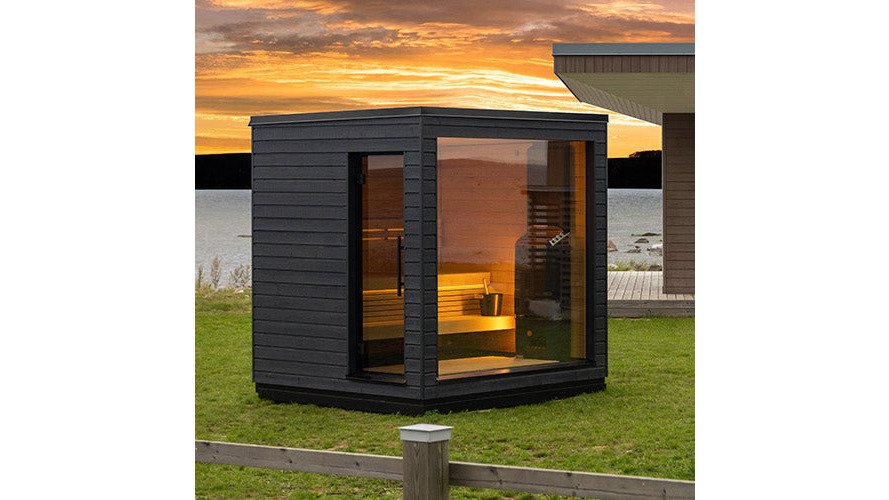
For heat, a full-spectrum infrared sauna like The Sauna - Premium Indoor/Outdoor Infrared Sauna reaches up to 170°F and works indoors or outdoors, which matters if you want the setup integrated into a deck or wellness room.

Safety Precautions for Contrast Therapy with Back Pain
Safety precautions for contrast therapy start with knowing who should not do it, and for back pain specifically, the list is longer than most general recovery guides admit. Anyone with uncontrolled hypertension, cardiovascular disease, Raynaud's phenomenon, or a diagnosed spinal condition should get clearance from a physician before starting.
Spinal-Specific Contraindications Most Guides Skip
General contrast therapy content treats the back like any other muscle group. It is not. The spine houses the spinal cord and nerve roots, and thermal stress can provoke symptoms in ways that heat applied to an arm or leg cannot.
General Rules Worth Following
- Never exceed 20 minutes in the sauna per round
- Exit immediately if you feel dizzy, nauseated, or notice numbness in the legs
- Stay hydrated, roughly 16-24 oz of water across a full session
- Avoid alcohol before or after
- Skip sessions during acute injury management in the first 48 hours
- Do not use contrast therapy to push through pain, if a phase makes symptoms worse, end the session
How to Test Tolerance Safely
If you have a spinal condition but want to try contrast therapy, do not start with a full protocol. A safer sequence:
- Heat only for 2-3 sessions to confirm heat does not aggravate symptoms
- Add brief cold (30-60 seconds at 55-60°F) after the heat phase
- Extend cold gradually over 2-3 weeks only if symptoms do not worsen
- Stop and reassess if any new symptom appears, especially anything radiating below the knee
Common Mistakes and Scientific Limitations
The biggest mistake is treating contrast therapy as a standalone cure. It is a recovery tool, not a treatment for structural back problems. It manages symptoms and supports soft tissue recovery.
Other common errors:
- Skipping the heat phase: Cold alone tightens the back further
- Going too cold too fast: Thermal shock without adaptation causes muscle guarding
- Doing it every single day without rest: The body needs recovery from the stressor itself
- Ignoring posture during the sauna: Slumping on a bench for 15 minutes undoes the benefit
Frequently Asked Questions
Is it okay to do contrast therapy every day?
For most healthy adults, daily contrast therapy is safe as long as sessions stay within reasonable limits: roughly 10 to 20 minutes of heat and 1 to 3 minutes of cold per round. Daily use can support local circulation, muscle soreness, and joint stiffness. However, more is not always better. Take at least one rest day each week, hydrate well, and stop if you feel dizzy or nauseous. If you have a heart condition or uncontrolled blood pressure, get clearance from your doctor first.
Who should not do contrast therapy for back issues?
Skip contrast therapy if you have an acute spinal injury, a herniated disc with active nerve compression, severe osteoporosis, or a diagnosed spinal condition that worsens with temperature shifts. People with Raynaud's phenomenon, peripheral neuropathy, or open wounds should also avoid cold plunges. Pregnant women and anyone with cardiovascular disease should talk to a physician before starting. When in doubt, ask your doctor whether heat and cold are appropriate for your specific back issue.
How can I set up a contrast therapy system at home?
A basic home setup needs two things: a heat source and a cold source. For heat, a full-spectrum infrared sauna that reaches up to 170°F works well indoors or outdoors. For cold, choose a plunge tub with a chiller that holds water between 45°F and 55°F. Place them within a few steps of each other so you can move between them quickly. A 110V outlet is enough for many cold plunge chillers, but check the manufacturer's requirements before installation.
What are the physiological benefits of heat and cold for spinal inflammation?
Heat triggers vasodilation, which increases blood flow to tight paraspinal muscles and helps clear metabolic waste. Cold causes vasoconstriction, which reduces inflammation and numbs pain signals. Alternating the two creates a pumping effect on local circulation, supporting lymphatic drainage and tissue oxygenation. This cycle can ease muscle spasms, reduce joint stiffness, and improve nerve conduction velocity over time. The result is less soreness and better mobility for people managing chronic back pain.