

How to Keep Cold Plunge Cold: 7 Steps
Table of Contents
- Why Keeping Your Cold Plunge Cold Matters
- Optimal Temperature Ranges for Cold Therapy
- How to Insulate a Cold Plunge Tub Effectively
- Cold Plunge Chiller Maintenance and Water Circulation
- Managing Water Chemistry and Filtration
- Climate-Specific Strategies to Maintain Temperature
- Benefits of Daily Cold Plunge and Consistency
- Frequently Asked Questions
Last Updated: September 27, 2026
Why Keeping Your Cold Plunge Cold Matters
Getting a cold plunge is one thing. Learning how to keep cold plunge cold is another. Most people buy the tub, fill it with water, and expect the temperature to stay where they set it. Reality is messier. Without proper insulation, circulation, and maintenance, your water warms up fast. You're left with a lukewarm bath instead of the therapeutic cold exposure your body needs.
The stakes matter here. Cold therapy works because of the temperature shock and the physiological response it triggers. A 45-degree plunge delivers measurable benefits. A 60-degree tub? You're mostly just sitting in cold water without the real recovery gains. That's why learning how to keep cold plunge cold is essential if you want results from your investment.
At Heaven 417, we offer high-quality cedar saunas and contrast therapy systems. Maintaining the right temperature is the foundation of whether your system actually works. The good news: it's entirely manageable once you understand the mechanics.
Optimal Temperature Ranges for Cold Therapy
The ideal temperature for cold water immersion sits between 45 and 55 degrees Fahrenheit. This range triggers the cold shock response without crossing into dangerous territory. Your body activates its parasympathetic nervous system, blood vessels constrict, and circulation improves, all the therapeutic effects you're after.
Some athletes push lower, down to 39 degrees. But that's aggressive territory. For most people doing daily cold plunges at home, staying in the 45-55 range gives you the benefits with better tolerance and safety margins.
Temperature matters more than duration. A 2-minute plunge at 50 degrees beats a 5-minute soak at 65 degrees every time. The cold shock is what your body responds to, and that happens in the first minute anyway.
Here's what to expect at different temperatures:
- 50-55°F: Mild cold exposure. Good for beginners. Easier to sustain for 3-5 minutes.
- 45-50°F: Moderate intensity. Standard range for most recovery protocols. 2-3 minutes optimal.
- 39-45°F: Aggressive cold. For experienced users only. 1-2 minutes maximum.
- Above 60°F: Loses therapeutic effect. Feels cold but doesn't trigger the response you need.
The challenge isn't hitting the target temperature once. It's holding it there day after day, especially in warmer months. That's where your system setup and maintenance routine make the difference.
How to Insulate a Cold Plunge Tub Effectively
Heat loss happens three ways: through the walls, the surface, and water circulation. You can't stop all of it, but you can slow it down dramatically with proper insulation.
The RevX Acrylic X Tub comes with three-inch foam-insulated walls built in. But insulation doesn't end at the tub itself.

Invest in an insulating lid. This is non-negotiable. An uncovered tub loses heat constantly to the air. A fitted lid cuts that loss by 60-70%. When you're not using the tub, the lid stays on. Even when you're between plunges, it makes a measurable difference.
Check your thermal conductivity. Some materials transfer heat faster than others. Fiberglass and acrylic are decent insulators. Wood (like the cedar in the Aurland Cedar Ice Bath) offers natural insulation properties. Metal conducts heat away quickly, so avoid metal fixtures in direct contact with the water.
Reduce surface exposure. The larger the water surface area, the more heat escapes. Deeper, narrower tubs are more efficient than shallow, wide ones. This is why the X Tub's 34-inch depth works so well, you get full submersion without a huge surface area bleeding warmth.
Insulate the ground beneath the tub. Heat transfers downward into the soil or concrete. Place rigid foam insulation or a thermal mat under the tub. This simple step prevents 10-15% of your heat loss.
Use thermal covers between uses. When the tub isn't in use, the cover stays on. Your chiller doesn't have to work as hard to maintain temperature overnight or during the day.
These steps work together. The tub's built-in insulation handles the walls. The lid handles the surface. The ground insulation handles the base. Combined, you're looking at retaining 70-80% of your cooling capacity instead of losing half your effort to ambient heat.
Cold Plunge Chiller Maintenance and Water Circulation
Your chiller is the engine. A water circulation pump is the transmission. Neither works well without the other, and both need regular maintenance.
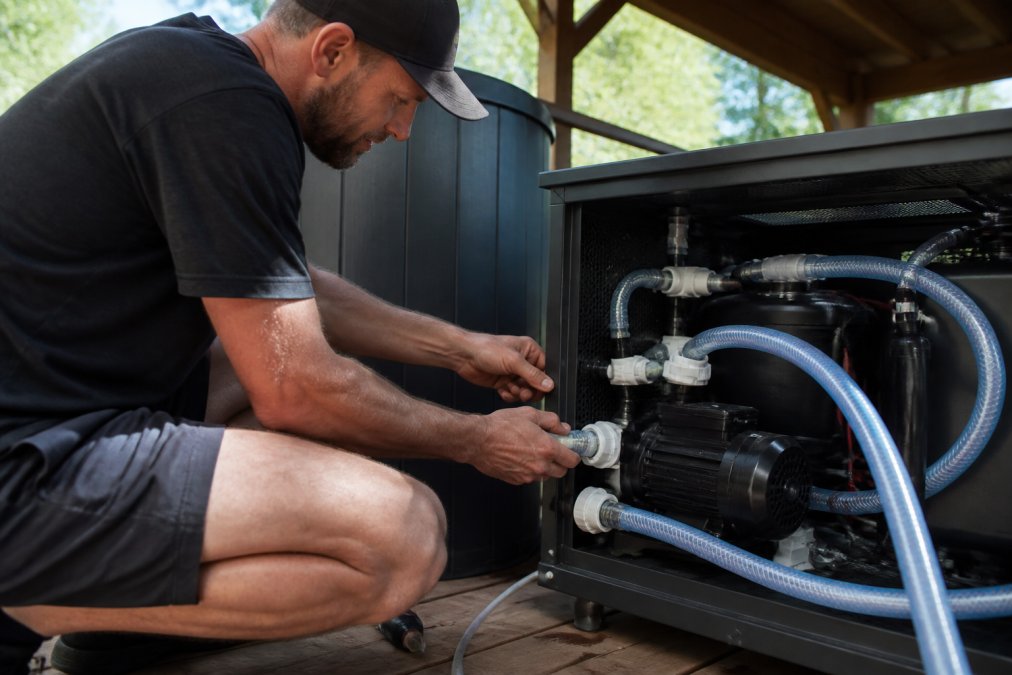
The circulation pump matters more than most people realize. Stagnant water warms unevenly. A good pump, like the 200W high-flow pump in the RevX X-FLOW system, keeps water moving constantly. This breaks up thermal layers and distributes cooling evenly throughout the tub. It also prevents biofilm and algae from settling in dead zones.
Check your pump monthly. Listen for unusual noises. Feel the hoses for blockages. If water flow drops, the filter is likely clogged. A clean filter means your pump runs efficiently and your chiller doesn't have to work overtime.
Chiller maintenance is straightforward but essential. The Frostgard Pro uses a 1 HP compressor. That compressor needs clean air intake. Dust clogs it. Check the intake filter every month. Clean or replace it if it looks dirty. A clogged intake forces the compressor to work harder, heating up the system and reducing cooling capacity.

Drain and inspect your chiller's water lines quarterly. Mineral buildup and sediment reduce efficiency. A simple flush takes 30 minutes and keeps everything running at full capacity. If you live in a hard-water area, do this every 6 weeks instead.
Monitor water flow rate. Most chillers should maintain 500+ gallons per hour. If yours drops below 400 GPH, something's restricting flow. Check for kinked hoses, blocked filters, or pump issues. Low flow means uneven cooling and temperature inconsistency.
The RevX X-FLOW filtration system handles much of this automatically. Its 20-micron sediment filter captures debris before it reaches your chiller. The integrated heat sink protects your water from warming due to pump activity. But even with an advanced system, you still need to check filters monthly and clean hoses seasonally.
Think of chiller maintenance like car maintenance. Regular small checks prevent expensive failures.
Managing Water Chemistry and Filtration
Clean water matters as much as cold water. Bacteria, algae, and mineral buildup don't just make the water gross, they clog your chiller and reduce its efficiency.
Most people default to chlorine or salt systems. Those work, but they're reactive. By the time you're adding chemicals, biofilm is already starting to form. A better approach is continuous filtration and UV sanitation.
The RevX X-FLOW system uses an 18W UV-C sterilizer that destroys bacteria and algae DNA on contact. No chemical buildup. No chlorine smell. The 20-micron sediment filter captures hair, skin cells, and debris before they decompose and foul the water.

Run your filtration system 24/7. This is the key. Continuous circulation and filtration prevent biofilm from establishing. It's easier to maintain clean water than to clean dirty water.
Test water chemistry weekly. pH should stay between 7.0 and 7.6. Alkalinity between 80-120 ppm. If you're using any chemical sanitation, follow manufacturer guidelines. But honestly, a good UV system plus mechanical filtration handles most of the work.
Drain and refill seasonally. Even with perfect filtration, water degrades over time. Minerals accumulate. Sediment settles. A full drain and refill every 3-4 months keeps everything fresh. It's a few hours of work and saves months of maintenance headaches.
Don't skip the pre-filter. Before water reaches your chiller, it should pass through a pre-filter. This catches large debris and protects your expensive equipment. A $40 pre-filter saves you thousands in chiller repairs.
Water chemistry is boring until something goes wrong. Then it becomes expensive. Spend 30 minutes a week on maintenance now, or face potential issues later. The math is simple.
Climate-Specific Strategies to Maintain Temperature
Your location changes everything. A cold plunge in Maine faces different challenges than one in Arizona.
In cold climates (below 40°F ambient winter temps): Your main challenge is keeping the water from freezing. The Frostgard Pro can heat water up to 42°C (107°F) for recovery sessions, which helps.
Benefits of Daily Cold Plunge and Consistency
This is where the real payoff lives. Cold plunges aren't a one-time thing. The benefits compound with consistency.
Frequently Asked Questions
What is the ideal temperature for a cold plunge?
The ideal cold plunge temperature ranges from 45°F to 55°F (7°C to 13°C) for most users. This range delivers the cold exposure benefits, reduced inflammation, enhanced recovery, and improved circulation, while remaining safe for regular immersion. Beginners may start at the warmer end (50-55°F) and gradually adapt to colder temperatures. Advanced users often target 45-50°F. Always consult your healthcare provider before starting cold therapy, especially if you have cardiovascular conditions.
How often should I change the water in my cold plunge?
With proper cold plunge chiller maintenance and filtration, you can maintain the same water for 3-6 months. A quality filtration system like the RevX X-FLOW removes bacteria, sediment, and contaminants continuously, dramatically reducing the need for water changes. However, drain and refill completely if you notice algae growth, cloudy water, or chemical imbalances. Regular testing of water chemistry ensures sanitation without frequent drains, saving water and energy.
Can I use my cold plunge in hot climates?
Yes, but maintaining temperature requires a more powerful chiller and aggressive insulation. In hot climates, thermal loss accelerates, so invest in a high-capacity chiller like the Frostgard Pro (1 HP compressor) or the RevX LUX system (1.5 HP). Combine this with a well-insulated tub, three-inch foam walls are essential, and use an insulating lid when not in use. You may also need to run the chiller more frequently, increasing energy costs. Strategic placement in shaded areas and nighttime cooling sessions help offset ambient heat.
What are common mistakes people make when trying to keep cold plunges cold?
The biggest mistake is underestimating thermal loss. Leaving tubs uncovered, using inadequate insulation, or choosing a chiller with insufficient cooling capacity leads to temperature drift. Poor water circulation creates thermal stratification (warmer water at the surface), reducing effective cold exposure. Neglecting filtration and water chemistry allows biofilm and algae to form, requiring frequent drains. Finally, many users ignore seasonal adjustments, summer heat and winter frost demand different strategies. Proper insulation, circulation, and a appropriately sized chiller prevent these issues.
Getting your cold plunge to the right temperature is one challenge. Keeping it there is another. The systems we recommend, like the Frostgard Pro Ice Bath Chiller and the RevX Acrylic X Tub with LUX chiller, handle both. They're built for daily use, designed with proper insulation, and backed by filtration systems that reduce maintenance. If you're serious about cold therapy, invest in equipment that makes consistency easy. That's where the real results come from.