

Sauna and Cold Plunge Combo Benefits for Recovery
Table of Contents
- How the Sauna and Cold Plunge Combo Works
- Sauna and Cold Plunge Combo Benefits Backed by Physiology
- Cold Plunge Before or After Sauna: Which Order Is Right?
- Sauna and Cold Plunge Duration: How Long Should Each Session Last?
- Building a Contrast Therapy Protocol That Fits Your Goals
- Safety, Contraindications, and Post-Session Nutrition
- Home Setup Options for Sauna and Cold Plunge
- Frequently Asked Questions
Last Updated: September 14, 2026
How the Sauna and Cold Plunge Combo Works
The sauna and cold plunge combo is a contrast therapy practice that alternates deliberate heat exposure with deliberate cold exposure in a single session. Heat opens blood vessels and raises core temperature; cold constricts them and triggers a sharp nervous-system reset. The back-and-forth is what produces the effect, not either extreme on its own.
This plays out in how people actually use their backyard setups: ten to fifteen minutes of heat, a brief plunge, then repeat. The physiology is straightforward. Heat drives vasodilation and sweating; cold drives vasoconstriction and norepinephrine release. Cycling between the two challenges the autonomic nervous system in a controlled way, which is why contrast therapy has moved from athletic training rooms into home wellness sanctuaries.
What most guides miss is that the sequence and timing matter more than the equipment. A poorly ordered session delivers a fraction of the benefit of a well-structured one. Below, we break down the physiology, the order question, and how to build a protocol around your actual goals.
Sauna and Cold Plunge Combo Benefits Backed by Physiology
The benefits of a sauna and cold plunge combo trace back to how the body responds to thermal stress. Each exposure triggers a distinct set of adaptations, and stacking them produces effects neither delivers alone.
Cardiovascular and Circulatory Effects
Heat exposure increases heart rate and widens blood vessels, effectively giving the circulatory system a workout. Cold exposure reverses the response: vessels tighten, blood shifts toward the core, and the heart works against greater resistance. Alternating the two trains the cardiovascular system to move between these states efficiently, which many practitioners associate with better circulation and vascular flexibility. Research on heat and cold exposure continues to expand, and organizations such as the American Heart Association track how thermal stress affects cardiovascular function.
Inflammation, Muscle Recovery, and Metabolic Health
Cold immersion is the recovery half of the equation. It constricts blood vessels, which can reduce swelling and ease delayed onset muscle soreness after hard training. Heat, applied afterward, restores circulation and helps clear metabolic waste. Together they support post-workout recovery and cellular repair. Cold exposure also activates brown adipose tissue, the type of fat that burns energy to produce heat, which is why contrast therapy shows up in conversations about metabolic health and thermogenesis.
Cold Plunge Before or After Sauna: Which Order Is Right?
For most people, the cold plunge comes after the sauna, not before. Ending on cold leaves you alert and regulates core temperature efficiently. Ending on heat can leave you feeling sluggish and slow to cool down.
That said, the "right" order depends on your goal:
- Recovery and inflammation: Sauna first, cold plunge last. The cold finish reduces swelling and accelerates the return to baseline.
- Energy and alertness: Cold plunge first, sauna second. The cold primes the nervous system; the heat then promotes relaxation.
- Maximum contrast effect: Alternate two to three rounds, finishing cold.
A common mistake is treating the order as fixed. It isn't. Match the sequence to what you want the session to do, and keep the transitions quick so the contrast stays sharp.
Sauna and Cold Plunge Duration: How Long Should Each Session Last?
Sauna and cold plunge duration should follow a simple rule: long enough to trigger the response, short enough to stay safe. For most healthy adults, that means 10 to 15 minutes in the sauna and 1 to 3 minutes in the cold plunge, repeated for two to three rounds (the CDC).
Longer is not better. Extended heat exposure raises the risk of dehydration and lightheadedness, and prolonged cold immersion offers diminishing returns past a few minutes. Beginners should start at the low end and build tolerance gradually.
| Session Goal | Sauna Duration | Cold Plunge Duration | Rounds |
|---|---|---|---|
| Beginner adaptation | 8-10 minutes | 30-60 seconds | 2 |
| General recovery | 12-15 minutes | 1-2 minutes | 2-3 |
| Athletic recovery | 15-20 minutes | 2-3 minutes | 3 |
| Stress and longevity | 10-15 minutes | 1-3 minutes | 2 |
Listen to your body over the clock. If you feel dizzy or chilled to the point of shivering uncontrollably, end the round.
Building a Contrast Therapy Protocol That Fits Your Goals
A contrast therapy protocol is a structured plan that defines your heat and cold durations, the order, the number of rounds, and how often you repeat the session. Most guides hand you one template and call it done. That is the wrong approach, because the protocol that burns fat, the protocol that speeds recovery, and the protocol that calms your nervous system are not the same protocol.
Use the decision matrix below to match the sequence to your primary goal. If you have more than one goal, pick the one that matters most for the next eight weeks and build around it.
| Primary Goal | Order | Sauna | Cold Plunge | Rounds | Frequency |
|---|---|---|---|---|---|
| Weight loss / metabolic | Cold first, then heat | 15-20 min | 2-3 min | 2-3 | 4-5x per week |
| Muscle recovery | Heat first, cold last | 15-20 min | 2-3 min | 3 | 3-4x per week |
| Mental health / stress | Heat first, cold last | 10-15 min | 1-3 min | 2 | 4-6x per week |
| Sleep quality | Heat only, cold optional | 15-20 min | 1 min (optional) | 1-2 | Evening, 3-4x per week |
| General longevity | Alternate, finish cold | 12-15 min | 1-2 min | 2-3 | 3-4x per week |
Weight Loss and Metabolic Health
Cold exposure activates brown adipose tissue, the type of fat that burns energy to generate heat, and the effect is amplified when cold comes first and heat follows. Starting cold forces the body to ramp up thermogenesis from a lower baseline, and the subsequent sauna session sustains the elevated metabolic rate. Keep sauna rounds longer (15 to 20 minutes) and cold rounds shorter (2 to 3 minutes), and aim for four to five sessions per week. Pair this with resistance training, contrast therapy supports the metabolic side, not the muscle-building side.
Muscle Recovery for Athletes
Train hard, recover harder. Athletes benefit from three rounds of 15 to 20 minutes of heat followed by 2 to 3 minutes of cold, finishing cold to control inflammation. Schedule sessions within a few hours of training, and prioritize hydration and protein afterward to support muscle repair. One caveat worth knowing: if hypertrophy is your primary goal, save the cold plunge for at least a few hours after lifting rather than immediately after, since cold can blunt some of the inflammatory signaling that drives muscle adaptation.
Mental Health and Stress Resilience
For stress resilience and mental clarity, two rounds of 10 to 15 minutes of heat and 1 to 3 minutes of cold work well. The goal here is nervous-system regulation, not physical recovery. Ending on cold leaves you alert; ending on heat leaves you relaxed. Many people find a session in the evening helps with cortisol regulation and sleep, while a morning session is better for focus and mood. Consistency matters more than intensity, so a shorter session you actually do beats a longer one you skip.
Sleep Quality
If sleep is the goal, weight the session toward heat and treat cold as optional. A 15- to 20-minute sauna session in the early evening, followed by a brief cool rinse rather than a full plunge, supports the natural drop in core temperature that precedes sleep. A hard cold plunge too close to bedtime can leave some people wired rather than relaxed.
How to Know It Is Working
Track three things for four weeks: resting heart rate, sleep quality, and how you feel 24 hours after a hard training session. If none of them move, the issue is usually consistency or transition speed, not the protocol itself.
Safety, Contraindications, and Post-Session Nutrition
Contrast therapy is well tolerated by most healthy adults, but the margin for error is narrower than most benefit-focused guides admit. Heat and cold are both cardiovascular stressors, and the combination stacks them. Treat the list below as a screening tool, not a substitute for a conversation with your physician.
Who Should Avoid the Combo (or Get Clearance First)
Skip it entirely unless a physician clears you:
- Uncontrolled high blood pressure or a history of hypertensive crisis
- Known heart rhythm disorders, including atrial fibrillation
- Prior heart attack, stroke, or diagnosed coronary artery disease
- Pregnancy
- Raynaud's phenomenon or other cold-triggered circulatory conditions
- Open wounds, active infections, or acute illness with fever
Get medical clearance before starting:
- Type 1 or Type 2 diabetes, particularly with neuropathy that dulls temperature sensation
- Medications that affect sweating, heart rate, or blood pressure (beta blockers, diuretics, some antidepressants)
- History of fainting, seizures, or orthostatic hypotension
- Age over 65 with any cardiovascular risk factor
- Recent surgery or musculoskeletal injury still in the acute phase
The cold side carries the sharper risk. Cold shock triggers an involuntary gasp and a rapid spike in heart rate and blood pressure within the first 30 seconds, the window where most incidents happen (pubmed.ncbi.nlm.nih.gov). That is why beginners should never plunge alone, and why anyone with a cardiac history should not treat this as a casual habit.
Red Flags That End the Session Immediately
Stop and get out if you experience chest pain, shortness of breath disproportionate to effort, dizziness, nausea, a sudden severe headache, confusion, or shivering you cannot control. Shivering that escalates past a minute or two is a sign you have overshot your cold tolerance, not a sign of toughness.
Post-Session Nutrition and Hydration
This is the part most guides skip entirely, and it matters because both heat and cold pull fluid and electrolytes out of your system. Sweating in the sauna can cost you meaningful sodium and potassium; cold immersion then shifts blood volume toward the core and stresses the kidneys' fluid regulation.
A practical post-session routine:
- Rehydrate first. Drink 16 to 24 ounces of water with an electrolyte source within 30 minutes of finishing. Plain water alone after heavy sweating can dilute sodium levels further.
- Eat within 60 to 90 minutes. A meal combining protein and carbohydrates supports muscle repair and restores glycogen. A common pattern is 20 to 40 grams of protein paired with a real carbohydrate source.
- Skip alcohol. It worsens dehydration and interferes with the body's ability to regulate core temperature for hours afterward.
- Delay the big meal if you feel nauseated. Cold exposure can suppress appetite temporarily; forcing a large meal too soon is counterproductive.
Home Setup Options for Sauna and Cold Plunge
Building a home setup turns contrast therapy from a gym errand into a daily habit, and that consistency is where most of the benefit lives. The two core pieces are a sauna and a cold plunge with reliable temperature control.
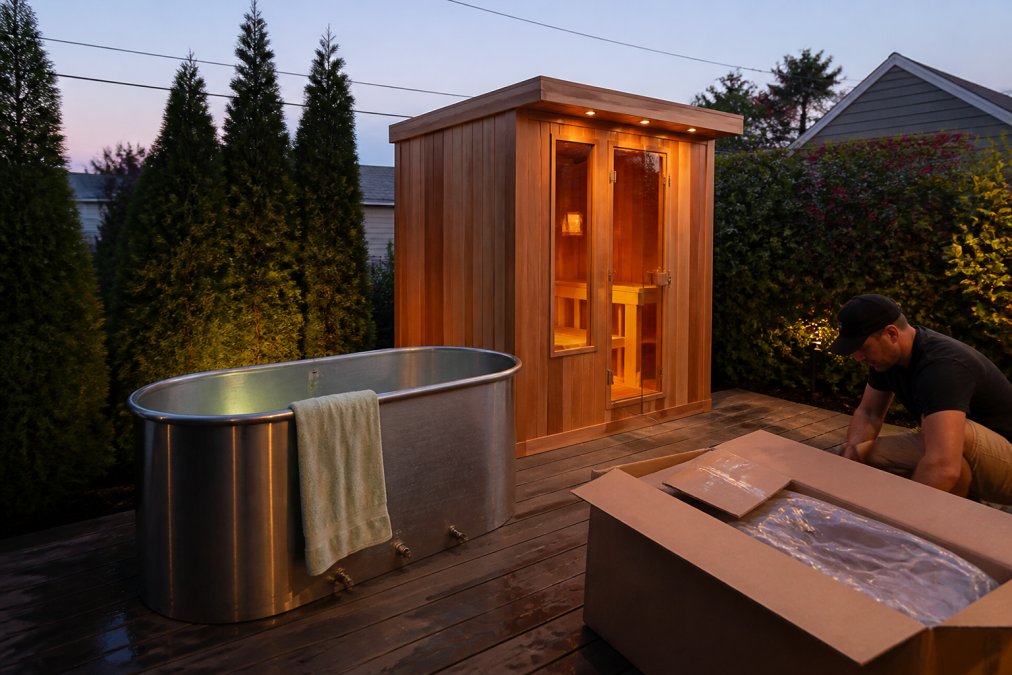
For a compact, entry-level build, the Eldvik 2-Person Outdoor Infrared Sauna pairs far-infrared heating with Canadian Red Cedar construction, and the Aurland Cedar Ice Bath with 1HP Chiller keeps water cold automatically so you are not hauling ice. For a more permanent installation, the Auris One Luxury Outdoor Cedar Sauna offers electric and wood-burning heating, while the Frost Cold Plunge Tub holds precise temperatures with its integrated chiller.


A commercial facility offers convenience but locks you into their schedule and shared water. A home setup costs more upfront and requires space and power, but it removes every excuse to skip a session.
The real challenge with contrast therapy is not understanding the benefits. It is building a setup you will actually use every day, with equipment that holds temperature reliably and lasts. Heaven 417 offers hand-selected cedar saunas and contrast therapy systems, including the Eldvik 2-Person Outdoor Infrared Sauna, the Aurland Cedar Ice Bath with its 1HP chiller, and the Auris One Luxury Outdoor Cedar Sauna. As an authorized dealer, we guide you from selection through installation, with easy monthly payments available at checkout. Get started with Heaven 417 and turn your backyard into a sanctuary for deep recovery and longevity.
Frequently Asked Questions
Is it good to do a sauna and cold plunge together?
Yes, when done with sensible timing. Alternating heat and cold drives vasodilation and vasoconstriction, which supports circulation, helps clear metabolic waste, and can reduce systemic inflammation. Most people finish with cold to leave feeling alert and refreshed. Keep sauna sessions to 10-20 minutes and cold plunges to 1-3 minutes, and check with a doctor first if you have cardiovascular conditions or uncontrolled blood pressure.
What is the optimal order for contrast therapy?
For most goals, sauna first, then cold plunge. Heat raises your core temperature and opens blood vessels; the cold plunge then constricts them, which is the contrast that drives the circulatory and recovery response. If your goal is mental clarity before a workout, a short cold plunge first can work, but the classic contrast therapy protocol is heat then cold, repeated 2-4 rounds, always ending on cold.
How long should a sauna and cold plunge session last?
A typical sauna and cold plunge duration is 10-20 minutes in the sauna at 160-190°F, followed by 1-3 minutes in cold water at 45-55°F. Repeat for 2-4 rounds. New users should start with 10 minutes of heat and 1 minute of cold, then build up. Listen to your body: dizziness, numbness, or shivering that won't stop are signals to end the session.
Can I do a sauna and cold plunge combo at home?
Yes. A home setup usually means an outdoor cedar sauna paired with a cold plunge tub that has an integrated chiller to hold 45-55°F without constant ice. Heaven 417 offers options like the Eldvik 2-Person Outdoor Infrared Sauna at $5,999 and the Aurland Cedar Ice Bath with 1HP Chiller at $6,999. A 240V circuit is often required, so confirm electrical needs and installation support before you buy.