

The Plunge vs Sun Home Saunas: Cold Plunge Comparison
Table of Contents
- The Plunge vs Sun Home Saunas: Key Differences at a Glance
- Cooling Technology and Temperature Control
- Insulation, Build Quality, and Long-Term Durability
- The Benefits of Daily Cold Plunge: What Contrast Therapy Actually Delivers
- How Long to Cold Plunge for Recovery
- Cold Plunge Maintenance Guide: Water Care, Filtration, and Noise
- Price, Warranty, and Long-Term Operational Costs
- Conclusion
- Frequently Asked Questions
Last Updated: September 20, 2026
The Plunge vs Sun Home Saunas: Key Differences at a Glance
The Plunge vs Sun Home Saunas is really a question about cold plunge ownership: what you are buying, how it holds up, and what it costs to run. Both sell cold immersion; what separates them is engineering, not branding.

The short answer: The Plunge builds rigid, plumbed-in acrylic tubs with integrated chillers. Sun Home Saunas sells inflatable and barrel-style plunges alongside saunas. Neither is bad; they suit different homes, budgets, and installation realities.
What most comparison guides skip: the tub is the cheap part. The chiller, insulation, and maintenance cycle determine whether you actually use it in year three.
| Factor | The Plunge | Sun Home Saunas | What It Means For You |
|---|---|---|---|
| Tub construction | Rigid acrylic, plumbed | Inflatable and barrel options | Rigid holds temperature better |
| Cooling approach | Integrated chiller unit | Chiller paired with tub | Both need airflow and power |
| Setup complexity | Professional install typical | Some models are DIY-friendly | Inflatable wins on speed |
| Insulation efficiency | Thick foam walls | Varies by model | Affects long-term power bills |
| Best for | Permanent installs | Flexible or rental setups | Depends on your space |
Cooling Technology and Temperature Control
Cooling capacity is the most important spec, and where the plunge vs sun home conversation gets practical. A chiller's horsepower, flow rate, and compressor type decide how fast water recovers, how hard it works in summer heat, and how loud it runs.
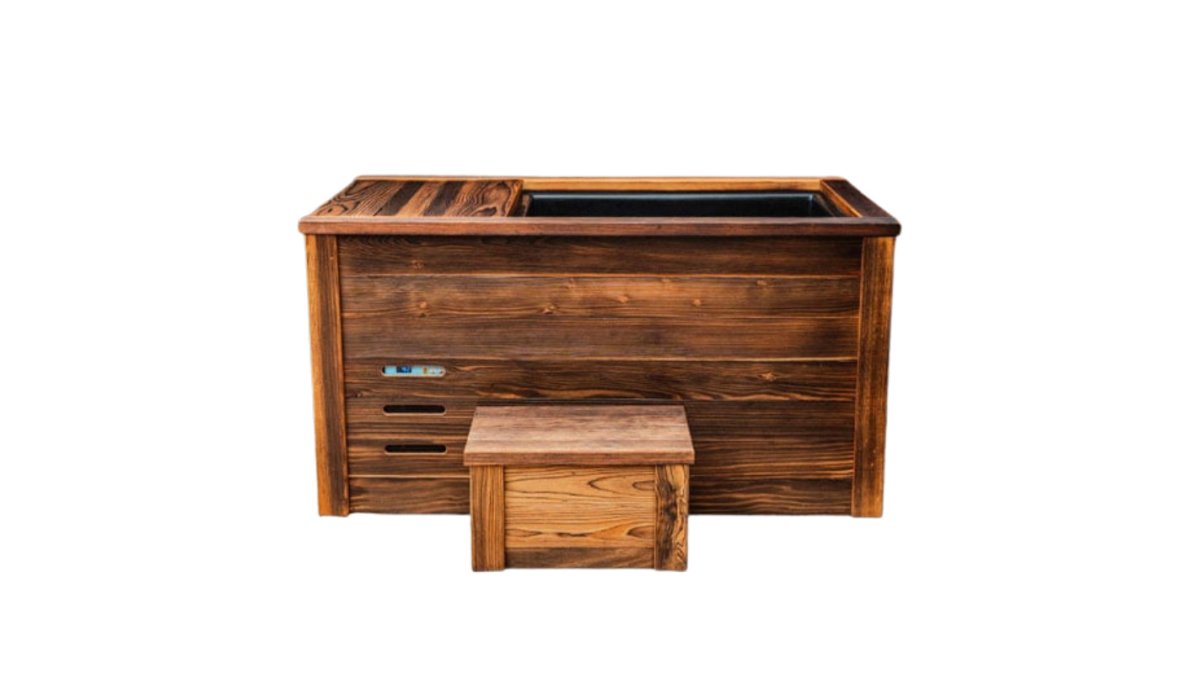
Heaven 417 offers cold plunges with integrated chillers, such as the Kooru Cold Plunge Tub with its 1/4 hp chiller, and the RevX Acrylic X Tub with a 1.5 HP chiller capable of cooling water to 34°F. The cooling capacity and insulation are key factors in maintaining desired temperatures efficiently.

The mechanism that matters more than horsepower: a chiller removes heat entering from three sources, the water surface, the tub walls, and your body. Horsepower addresses recovery; insulation and a fitted cover address the load. A 1 HP chiller on a well-insulated tub holds temperature more easily than a 1.5 HP chiller on a thin-walled inflatable fighting heat gain.
A well-matched system should hold water in the low 40s to mid 50s Fahrenheit without running continuously. If a unit runs nonstop, its electrical load climbs and compressor lifespan drops. Most manufacturers rate chillers for a 10,000 to 20,000-hour compressor life, at continuous duty, roughly 14 to 28 months. That is the real cost of an undersized chiller.
Water circulation matters as much as raw cooling. Good flow keeps temperature even and pushes filtered water through the system; poor circulation creates warm pockets near your legs.
The Spec Nobody Tests: Noise Output
Noise is the most under-reported number in cold plunge marketing, and it determines whether you use the tub at 6 a.m. without waking your household. Chillers emit two sounds: a continuous fan and pump hum, and a sharper compressor kick-in when cycling on.
Insulation, Build Quality, and Long-Term Durability
Build quality decides whether your plunge still performs after several winters, and rigid and inflatable designs diverge sharply.
The Benefits of Daily Cold Plunge: What Contrast Therapy Actually Delivers
The benefits of daily cold plunge come from consistency, not intensity. Cold water immersion triggers vasoconstriction, blood vessels near the skin narrow, shifting blood toward your core. When you warm up, vessels widen and circulation increases.
- Reduced post-exercise soreness and stiffness
- A sharper, more alert feeling after sessions
- Better stress management through regular cold exposure
- Improved sense of mental resilience over weeks, not days
How Long to Cold Plunge for Recovery
How long to cold plunge for recovery depends on water temperature and experience level. Colder water means shorter sessions; most protocols land between two and ten minutes.
A practical starting framework:
- Beginner, water around 50-55°F: 2-3 minutes
- Intermediate, water around 45-50°F: 3-6 minutes
- Advanced, water below 45°F: 5-10 minutes maximum
Cold Plunge Maintenance Guide: Water Care, Filtration, and Noise
A cold plunge maintenance guide comes down to three systems: sanitation, filtration, and circulation. Neglect one and the water turns, the chiller strains, or both.
Typical maintenance cycle:
- Check and adjust water chemistry weekly
- Rinse or replace filters every one to two months, depending on use
- Deep clean the tub interior monthly
- Inspect the chiller intake for blockages seasonally
Price, Warranty, and Long-Term Operational Costs
Price is where the plunge vs sun home comparison gets uncomfortable, because sticker price hides the real number. Long-term operational costs include electricity, filters, water, and eventual chiller service, and almost no review calculates them. Here is the math.
The Electricity Math
A chiller's power draw depends on compressor size and duty cycle. For example, the Kooru Cold Plunge Tub, with its 110V plug, typically uses 350 - 500 Watts at 3-5 amps.
Filter and Chemical Costs
Filter replacement is the second recurring cost. Most cold plunge filters are rated for one to two months of regular use and cost $15 to $40 each, or $90 to $240 per year. Ozone generators, like the Ozonator in the Kooru Cold Plunge Tub, effectively sanitize water. Budget for filter replacements and other consumables as needed.
Water and Service
Most owners change water every two to four months depending on use and sanitation. At U.S. average water rates, that is a few dollars per change, negligible.
Warranty Reality
Warranty coverage varies by brand and component. Chillers usually carry a shorter term than the tub, a one-year limited chiller warranty and a three- to five-year structural tub warranty is a common split. Read what voids coverage: most chiller warranties require a covered, ventilated location and prohibit running in freezing ambient temperatures without a heater or drain-down. A single uncovered winter can void a compressor claim.
What This Means for the Comparison
For running costs, a 110V plunge, like the Kooru Cold Plunge Tub, offers convenience by plugging into a normal home outlet. Electrical outlets should be GFCI or grounded outlets as required by state laws. The upfront price of a cold plunge is one factor, but operational costs also contribute to the overall investment.
- Kooru Cold Plunge Tub, $7,999, handcrafted redwood with ozone sanitation, 110V plug, roughly 350-500 watts draw
- RevX Acrylic X Tub with LUX Chiller, $7,500, 1.5 HP chiller cooling to 34°F or heating to 104°F, three-inch foam-insulated walls
- Aurland Cedar Ice Bath with 1HP Chiller, $6,999, Canadian red cedar exterior with stainless steel interior
- The Sauna, Premium Indoor/Outdoor Infrared, $11,040, pairs with any plunge for a full contrast therapy circuit
- SaunaLife Model G6 Pre-Assembled Outdoor Sauna, $26,890, traditional Finnish dry heat up to 194°F
U.S. Department of Energy guidance on home energy use

Conclusion
Choosing a cold plunge involves considering how it integrates into your lifestyle. Well-insulated tubs, such as the RevX Acrylic X Tub with its three-inch foam-insulated walls, offer efficient temperature retention and are built for lasting performance.
Frequently Asked Questions
What are the key differences between The Plunge and Sun Home Saunas?
The main differences in cold plunges come down to cooling hardware, insulation, and price. Insulation matters most for running costs: thicker foam walls, like those on the RevX Acrylic X Tub, hold temperature longer and reduce how hard the chiller works. Build materials, warranty coverage, and electrical load also vary, so compare specs side by side before buying.
How does the cooling technology compare between these two brands?
Cold plunge systems rely on a chiller unit paired with a pump and filtration loop, which holds water at a consistent set point. The deciding factor is cooling capacity relative to tub volume and ambient temperature. A 1.5 horsepower chiller, like the one on the RevX Acrylic X Tub, reaches 34°F and is designed for daily use.
What is the maintenance requirement for a home cold plunge?
Expect to replace or clean filters every one to two months depending on use, and to check water chemistry weekly. Ozone sanitation, used in the Kooru Cold Plunge Tub, cuts chemical dosing because ozone breaks down contaminants and leaves no harmful byproducts. Drain and refill every few months, wipe the interior, and inspect the chiller intake for debris. Tubs with stainless steel liners, like the Aurland Cedar Ice Bath, are easier to wipe down than porous surfaces.
How long should you cold plunge for recovery?
Most recovery protocols call for 2 to 5 minutes in water between 45°F and 55°F, done after training rather than before. Start at 1 minute and add 30 seconds per session as your tolerance builds. Longer is not better: cold water immersion triggers vasoconstriction, and extended exposure past 10 minutes raises the risk of cold shock without added recovery benefit. Pair a short plunge with a sauna session for a full contrast therapy circuit.
Is a cold plunge worth the investment for a home wellness setup?
It depends on how often you will use it. A tub that holds temperature automatically, like the Kooru Cold Plunge Tub at $7,999, removes the daily ice-and-drain chore that causes most home plunges to sit unused. If you train hard, deal with chronic inflammation, or want a repeatable stress-reduction routine, daily access changes the math. Factor in electricity, filters, and water changes when comparing total cost.