

7 Cold Plunge Breathing Steps for Beginners
Quick Summary
Cold plunge breathing means slowing your breath before you enter and keeping it steady in the water. Take slow nasal breaths with exhales longer than inhales, breathe through the initial gasp, and avoid holding your breath. Start with 30 to 60 seconds and build up gradually.
- Take five to ten slow breaths before entering, inhaling for about four seconds and exhaling for about six.
- Expect the gasp reflex when cold water hits the skin, and let it happen without fighting it.
- Never hold your breath while submerged, and never plunge alone.
- Start with one to two minutes in week one and extend slowly as breathing stays controlled.
- Exit slowly and breathe with a longer exhale if your breath becomes rapid, shallow or uneven.
Table of Contents
- Why Breathing Matters in Your First Cold Plunge
- Preparing to Breathe Before You Enter the Water
- How to Breathe During an Ice Bath as You Enter
- Cold Plunge Breathing Exercises to Practice at Home
- Beginner Cold Plunge Duration and a Progressive Breathing Plan
- Safety Limits: Breath-Holding, Hyperventilation and Health Conditions
- Booking Your Cold Plunge Setup and Your First Session
- Frequently Asked Questions
Before a cold plunge, slow your breath down. Take a few long nasal breaths, let each exhale run longer than the inhale, and relax your shoulders. Steady breathing is a useful habit for a beginner, and it can help make a first session feel more manageable.
Heaven 417 is an authorized dealer of cedar saunas and contrast therapy systems. This guide covers the basics of breathing for a first cold plunge. This guide covers the basics: why breath matters, how to breathe on entry, a few practice exercises, a beginner duration plan, and the safety limits you should respect.
Cold water triggers a fast gasp reflex. That reflex is normal, and it fades with practice. The goal is not to hold your breath or push through. The goal is to keep breathing steadily while your body adjusts.
Cold plunge is a term for immersing the body in cold water, often between 45 and 55 degrees Fahrenheit. A common definition used in wellness circles is a short, deliberate exposure to cold water for recovery and comfort.
Why Breathing Matters in Your First Cold Plunge
Breathing is one part of a cold plunge you can control directly. Your breath can help you stay steady while your body responds to the cold.
Most beginners make the same mistake. They gasp, hold their breath, and rush to get out. A steady breath keeps the session manageable and makes it easier to stay in the water longer.
- Slow breathing helps calm the initial shock.
- Controlled exhales help the body settle.
- Steady breath keeps panic and hyperventilation away.
Preparing to Breathe Before You Enter the Water
Start preparing before you step near the tub. Sit or stand quietly and take five to ten slow breaths. Inhale through your nose for about four seconds and exhale through your mouth for about six seconds.
A common mistake is rushing from a hot sauna or hard workout straight into the cold. Give your breathing time to settle first.
Check your setup too. Make sure the water is at your target temperature and that the entry point is safe and stable.
How to Breathe During an Ice Bath as You Enter
Entry is the moment most beginners lose control of their breath. Cold water hitting the skin triggers the gasp reflex within a second or two, and the way you handle that first gasp sets the tone for the rest of the session. A repeatable, step-by-step protocol works better than trying to "stay calm" by willpower alone.
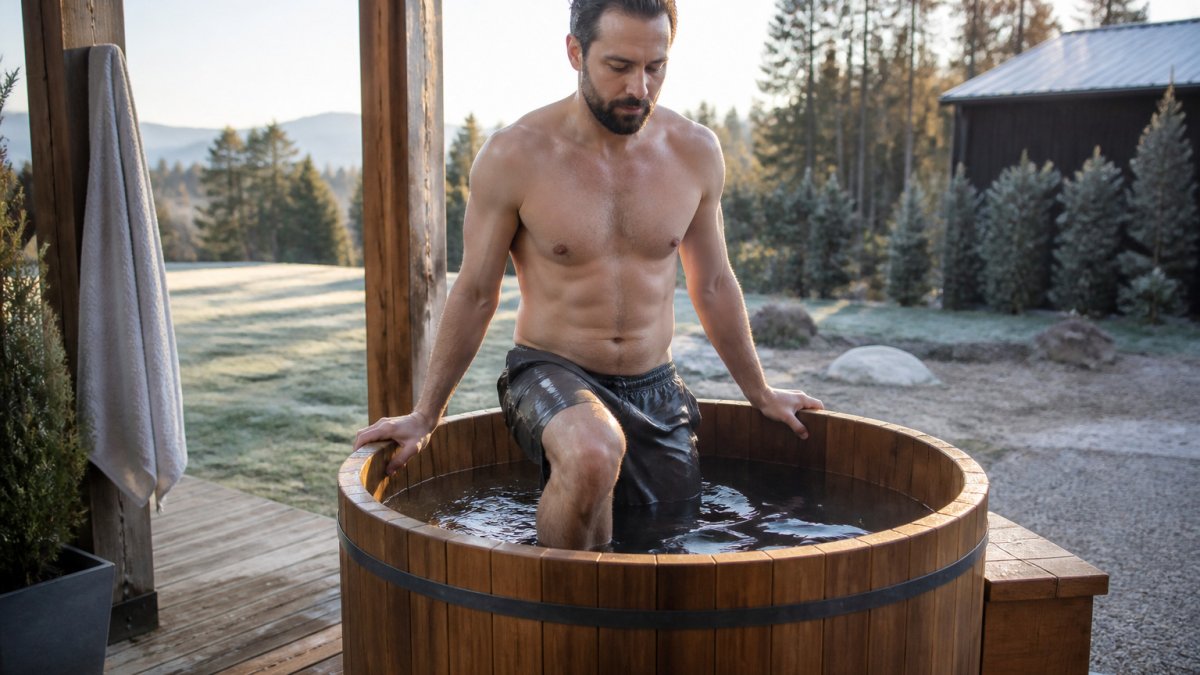
A simple first-minute protocol
- Before you step in (10-20 seconds): Stand next to the tub, feet flat, and take three slow breaths, inhale through the nose for about four seconds, exhale through the mouth for about six. Let your shoulders drop on each exhale.
- Feet and legs first: Lower your feet, then your legs, pausing for one full breath at each stage. Do not rush to the shoulders.
- The gasp: When the water reaches your torso, expect a sharp inhale. Let it happen, do not fight it and do not hold it. Follow it immediately with one long, slow exhale through pursed lips.
- First 30 seconds: Keep your exhales longer than your inhales. A workable rhythm is a 4-second inhale and a 6-second exhale. If counting feels stressful, use a phrase instead, silently say "breathe in, let go" on each cycle.
- Seconds 30-60: Settle into a steady, quiet breath. Lower your shoulders, unclench your jaw, and let your hands relax. If your breath is still ragged at 60 seconds, that is your cue to exit, not to push through.
If timed breathing is hard
Some people find counting makes them tense. Easier options: hum on the exhale, sigh audibly, or simply make each exhale last until you feel the urge to inhale. The goal is a longer, softer exhale, not a perfect count.
When breathing becomes uncontrolled
Rapid, shallow breathing, a racing heart, dizziness, or a feeling of panic are signals to stop. Exit the tub slowly, sit down, and breathe through your nose with a longer exhale until your breath feels even. Do not re-enter that session. If symptoms do not settle within a few minutes, or you feel faint or confused, seek medical help.
Relaxation cues to pair with breathing
- Drop your shoulders away from your ears on every exhale.
- Unclench your jaw and let your tongue rest low in your mouth.
- Soften your hands rather than gripping the tub edge.
- Keep your gaze steady rather than darting around.
These cues matter because tension in the shoulders and jaw feeds shallow, upper-chest breathing. Releasing them makes a slow exhale easier to sustain.
The entry protocol breaks down into five steps, each with a timing cue a beginner can follow.
| Step | What to do | Time |
|---|---|---|
| Before entry | Take three slow breaths, shoulders dropping | 10-20 seconds |
| Feet and legs | Lower in stages, one full breath per stage | One breath each |
| The gasp | Let the inhale happen, then one long exhale | Immediately |
| First 30 seconds | Inhale 4 seconds, exhale 6 seconds | 30 seconds |
| Seconds 30-60 | Settle into a steady, quiet breath | 30-60 seconds |
Cold Plunge Breathing Exercises to Practice at Home
You can practice these exercises outside the tub. Practicing on dry land makes the breath feel familiar when the water is cold.
- Slow nasal breathing: Inhale for four seconds, exhale for six seconds. Repeat for two minutes.
- Box breathing: Inhale for four, hold for four, exhale for four, hold for four. Stop if you feel lightheaded.
- Long exhale practice: Breathe in normally, then breathe out slowly for as long as is comfortable.
Practice for five minutes a day for a week before your first plunge.
Beginner Cold Plunge Duration and a Progressive Breathing Plan
Keep your first sessions short. Many beginners start with 30 to 60 seconds of immersion and build up slowly over several weeks.
Use this simple progression:
- Week 1: One to two minutes, once or twice a week.
- Week 2: Two to three minutes, two to three times a week.
- Week 3 and beyond: Extend gradually, but stop when breathing feels hard to control.
Track how your breathing feels at each stage. If it stays steady, you can extend slightly. If it becomes rapid or uneven, get out and rest. For tips on keeping the water temperature steady across your sessions, read cold plunge water temperature maintenance tips. To keep the water at a consistent cold level as you build up, see how to keep cold plunge cold.
Safety Limits: Breath-Holding, Hyperventilation and Health Conditions
Breathing techniques are a comfort tool, not a safety guarantee. Cold water can override even a practiced breath, so the limits below matter more than any breathing pattern.
Why breath-holding and forceful breathwork are risky
Cold water triggers the gasp reflex and a sudden rise in heart rate and blood pressure. Holding your breath during that response, or hyperventilating beforehand to "prepare", can lower carbon dioxide in the blood and make you feel lightheaded or faint. In water, fainting is the dangerous part. This is why breath-hold training and intense breathwork belong on dry land with qualified supervision, not in a cold tub. Calming breaths (slow, longer exhales) are safe and useful; breath-holding and hyperventilation are not beginner techniques.
What to do if breathing goes wrong
- Exit the water slowly and sit down.
- Breathe through your nose with a longer exhale until your breath evens out.
- Warm up gradually with dry layers, not a hot shower immediately.
- Seek medical help if you feel faint, confused, or your breathing does not settle.
Post-plunge breathing and recovery
After you exit, your breath may stay fast for a minute or two. Sit or stand calmly and take five slow breaths with longer exhales. Shivering is normal; uncontrolled shivering, numbness, or confusion are not, warm up and seek help if those appear. Give yourself 10-15 minutes to return to comfortable breathing before driving or exercising.
Health conditions and pregnancy
Check with a clinician before cold immersion if you have a heart condition, high blood pressure, respiratory problems, Raynaud's phenomenon, or are pregnant. Breathing approaches may need adjustment, and cold exposure may not be appropriate at all for some conditions.
Evidence and limits
Research on breathwork and cold exposure is still limited. Slow breathing may help you feel calmer and tolerate the cold better, but it does not eliminate the gasp reflex or make cold water risk-free. Treat breathing techniques as one part of a cautious, supervised practice, not a substitute for medical advice or common-sense safety.
Booking Your Cold Plunge Setup and Your First Session
Once you feel comfortable with the breathing basics, you can plan your setup. Heaven 417 carries cold plunge options built for home use, including the Kooru Cold Plunge Tub at $7,999.00 and the Aurland Cedar Ice Bath - No Chiller at $6,299.00.


Heaven 417 offers guidance from selection through installation. If you want to explore a fully equipped option, the RevX Acrylic X Tub Cold Plunge + LUX High Performance Chiller and Filtration System is priced at $7,500.00.

Keep your first session short, breathe slowly, and build up from there.
Frequently Asked Questions
How should beginners breathe during a cold plunge?
Beginners should focus on slow, steady breathing rather than gasping. Enter the water gradually, keeping shoulders relaxed and exhaling longer than you inhale. Most first-timers find that a calm, controlled exhale helps blunt the initial cold shock. If your breathing speeds up uncontrollably, step out, sit down and return to slow breathing before trying again. Practicing this on dry land before your first plunge makes the pattern feel familiar when the water hits.
Should you hold your breath during a cold plunge?
Beginners should avoid deliberate breath-holding in cold water. Holding your breath while the body is in cold shock can increase the risk of gasping or hyperventilating, and it adds strain on the heart. Instead, keep breathing with a steady, slow rhythm. Breath holds are better practiced on dry land in a controlled setting, and only after you are comfortable with normal breathing patterns.
What should you do if you start hyperventilating in cold water?
Exit the cold plunge immediately if breathing feels out of control, if you feel dizzy, chest pain, or confusion. Sit or lie down somewhere warm, and focus on long, slow exhales until your breathing settles. Do not re-enter the water until your breathing is calm and steady again. Anyone with a heart condition, high blood pressure, or pregnancy should talk to a doctor before cold plunging.
How long should a beginner stay in a cold plunge?
Most beginners should start with just 30 to 60 seconds in the water, focusing on breathing rather than endurance. Increase time gradually over several weeks as cold tolerance builds, adding roughly 30 seconds per session only when breathing stays controlled. Many experienced users stay in for 2 to 3 minutes, but there is no benefit to pushing beyond your comfortable limit, especially when starting out.
